


Publications
IN THE MIRROR- Interview with Zeta Tzioti, Axianews.gr
19-11-2026 12:13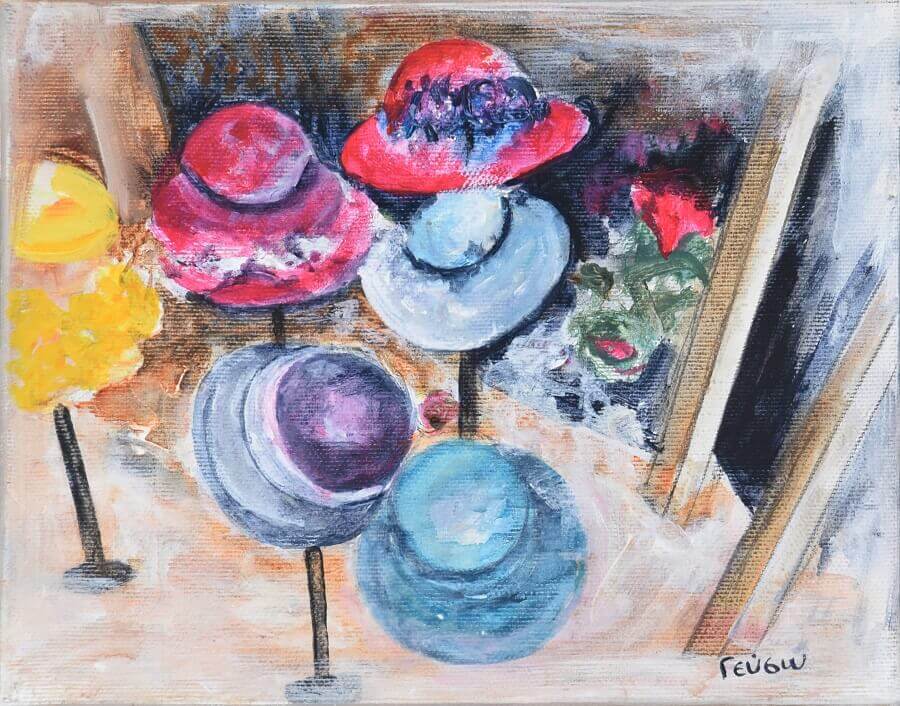
The mirror reflects our psycological state
Each exhibition provides an opportunity for a new dialogue between the artist and the art-loving public, between the artwork and the space that hosts it. In her new thematic series titled “In the Mirror,” presented at the UKKA LELLE space in Chora, Andros, artist Gefso Papadaki offers a visual exploration of the image, identity, and the ongoing quest for self-acceptance. The female figures in her works engage in a subtle dialogue with the space and its objects, transforming the mirror from a simple object into a symbol of introspection and self-awareness.
On the occasion of this new exhibition, we spoke with Gefso Papadaki about the inspiration behind this particular theme, the relationship between art and fashion, and the human need for validation, as well as her long artistic journey spanning more than three decades of creation.
-What does the title “In the Mirror” mean to you?
In the mirror, we come face to face with our external image. We get dressed, we check our appearance—sometimes fleetingly, but other times intently, such as when we have a very important meeting where we want to make a good impression, or in situations where we feel very insecure and are seeking validation.
-How did the idea for this thematic unit come about?
Women were the catalyst—and in particular through magazines overflowing with beautiful, flawless, almost “perfect” women wearing gorgeous clothes, clothes that hold such promise! Women who set the standard for so many others.
-How does your painting interact with accessories and fashion without competing with them?
I get the impression that they interact, complement each other, support one another, and share a knowing glance. They don’t compete
-What is the common thread that connects all the works in the exhibition?
It’s the strong feminine presence or the fashion accessories—often fetishistic—such as hats, high heels…
-The women in your works seem to be in a moment of personal reckoning. What do they ultimately see in the mirror?
They see their reflection—or what they’d like to be. It depends. The mirror is magical; our inner selves are unfathomable.
-Do you believe that the mirror reveals or hides our truth?
I think it depends on our psychological state at the time. There are days when, no matter how good our outward appearance may be, what we see doesn’t satisfy us—and that’s because the mirror primarily reflects our inner world. So, yes, in essence, it reveals our truth.
-How much do issues like self-image, beauty, and the need for acceptance concern you?
To a certain extent, yes. But I’d like to believe that I’m not bound by them—or at least not always.
-Are your works a commentary on the modern woman, or do they address human nature as a whole?
-It is a commentary on human nature, though so far it has focused primarily on women. And I say “so far” because we see that the fashion “industry” now caters to a very large extent to men as well. We see this both in our daily lives and in magazines. In any case, women dominate my work, perhaps because they concern me more.
-Is there any symbolism in the bold colors you use?
I really love red and its shades, which dominate most of the works in this series. They fill me with joy and optimism. More generally, though, red is the color of passion; it’s a symbol.
-Why have you continued to work with acrylics and collage for more than three decades?
I’m more comfortable with acrylics. They dry faster than oil, so I have the opportunity to make corrections or “build up” the color surfaces I want in a shorter amount of time. As for collage, it’s a bit of a game—it holds surprise. With collage, just as with watercolors, I work on a case-by-case basis.
-How does the creation of one of your works begin? From an image, a feeling, or a story?
The idea can start from something completely random. A story, a thought, a scene that moves me. Over the past decade, most of my works have been based on verses by Greek poets. Also, my last solo exhibition, which took place a year ago at the National Archaeological Museum’s Café, drew inspiration from the plants in the Museum’s garden in dialogue with the botanical motifs of the Museum’s exhibits. As you can see, emotion is the primary material for beginning a work or a series of works.
-After 24 solo exhibitions, what continues to inspire you in painting?
The inexhaustible need to create, the enigma, the poetic quality, the transformation of reality through which painting—and art in general—must express itself. Communication.
-How has your visual language evolved over the years?
Every exhibition, every encounter leads me to something else—I think something more abstract. Each milestone is a link in a chain that leads me somewhere else.
–Is there a milestone in your career that changed the way you create?
There isn’t any one significant milestone. On the other hand, the exploration is ongoing.
–What do you consider to be the most important experience from your participation in international events?
First of all, you step outside your own little world. It’s very moving to interact—both as a person and as a creator—with artists from all over the world.
The sense of “togetherness”—the commonalities that unite us—despite the different languages we speak and the different cultures we come from. The problems may be different, but the human spirit is universal.
-What does it mean to you that your works are part of public collections in Greece and abroad?
It’s a great honor for me, and I’m moved by the prospect that people I’ve never met—and probably never will—might see my work and engage with it.
–What do you think is the role of art in an era of intense social change?
-It serves as a different way of expressing society’s problems. In our time, as in all eras, art plays a comforting and, often, awakening role.
–How do you view the public’s relationship with contemporary painting today?
The truth is that when there’s a good painting exhibition, people flock to it. People need art. However, getting information to the general public requires effort—something that is sorely lacking in the mass media. Unfortunately.
-Do you believe that art can serve as a “mirror” of society?
It is, above all, a mirror of society.
-What does presenting this exhibition in Andros mean to you?
I am absolutely delighted by the prospect of presenting my work on this beautiful island, which also has a very significant artistic tradition.
-How did the collaboration for “Why Not?” come about?
Completely by chance and spontaneously. Three friends with three glasses of wine one winter evening—we said, why not let the visual arts “converse” in a more intimate space, such as a store selling accessories and fashion items, as long as that space provides the necessary breathing room for the artworks.
–Do you believe that such collaborations between fashion, photography, and painting can open up new avenues for the arts?
I certainly do! And that’s because, perhaps in this way, someone who wouldn’t normally step into a gallery or museum might come into contact with painting. There’s a lot of misunderstanding about all this. Some people think that to enter a gallery, you have to pay an admission fee or buy something. So, by stepping into a fashion space, you might just happen to come across art. And you never know when that spark will ignite!
-What would you like visitors to take with them when they leave the exhibition?
I’d like them to leave with a sweet aftertaste, perhaps with something to wonder—and for those who aren’t familiar with painting, a sense that art is for them, too.
If you could describe your work in three words, what would they be and why? What inspires you right now, and what are your next artistic projects?
-People are always at the center of my interests, even when they aren’t depicted. The relationships between people, and the relationship between people and the city and the environment. For now, I have a few scheduled exhibitions, while I’m also working on a new thematic series.
-If you were standing in front of your own mirror today as an artist, what would you say to yourself?
I’d tell myself not to be discouraged by any kind of difficulty and to keep working just as I have for so many years!
The Surrender of the Soul.
Back

